
Technical and fundamental analysis of the Australian dollar/US dollar pair (AUD/USD)
Overview: AUD/USD pair trades at levels of 0.6695-0.6705 following a shock to the Australian labour market: Unemployment rose to 4.9% in October from 4.7% ⁇ against forecasts of 4.7% ⁇ and is the highest since October 2021. And the economy lost 43,500...
The overview:
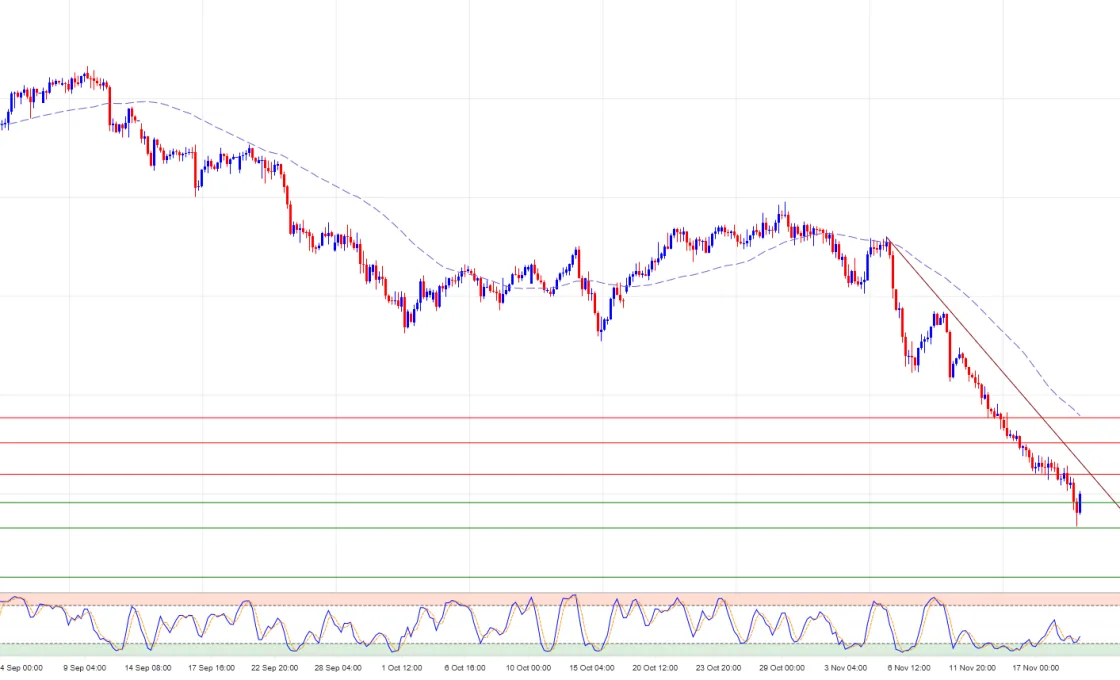
The AUD/USD pair trades at levels of 0.6695-0.6705 following a shock to the Australian labour market: unemployment rose to 4.9% in October from 4.7% ⁇ against forecasts of 4.7% ⁇ and is the highest since October 2021. The economy lost 43,500 jobs compared to expectations of 25,000 more, in the second consecutive month of recession. The Australian immediately dropped to around 0.6655 before rebounding partially. That adds up to the hardcore federal record from last night. The pair is trapped between the resistance of 0.6727-0.6797 and the support of 0.6691-0.6597.
The technical analysis:
Through the attached chart on the four-hour timeframe, we observe that the pair broke 0.6691 with a large red candle after working data, touched the support of 0.6659 with a bottom fuse, and then rebounded the blue candle to 0.6702. The rebound is technically from support and oversaturation ⁇ but the structure is clearly downward: price below the sharp downtrend line of the top of 0.7020, and far below the sloping moving average near 0.6795. The stochastic index at 31.03/25.12 is up slightly from oversaturation. 0.6727 is the first resistance ⁇ and multiplied by the trend line. Closing four hours below 0.6655 opens 0.6597.
The basic analysis:
The labour market ends Australia’s recovery cycle: the economy has lost more than 80,000 jobs in two months, and unemployment is at 4.9%, well above the Reserve Bank’s forecast of 4.7% until the end of 2026. Losses were concentrated in part-time jobs (-40,600). This data provides a strong argument for the three members who opposed November’s lifting. Capital Economics believes the bank will refrain from further tightening, and that its next move will be a cut near the end of next year. In other words: the Federal Reserve is raising and the Reserve Bank of Australia is going down. A divergence in monetary policy is a worst-case scenario for Australians. Bottom line: The trend is down sharply and primarily justified by rebounds and sales opportunities.